Video and social content
Start with a duration, visual mood, and platform context. Move to the music-video page when the track needs a visual treatment.
Tunee AI music generator
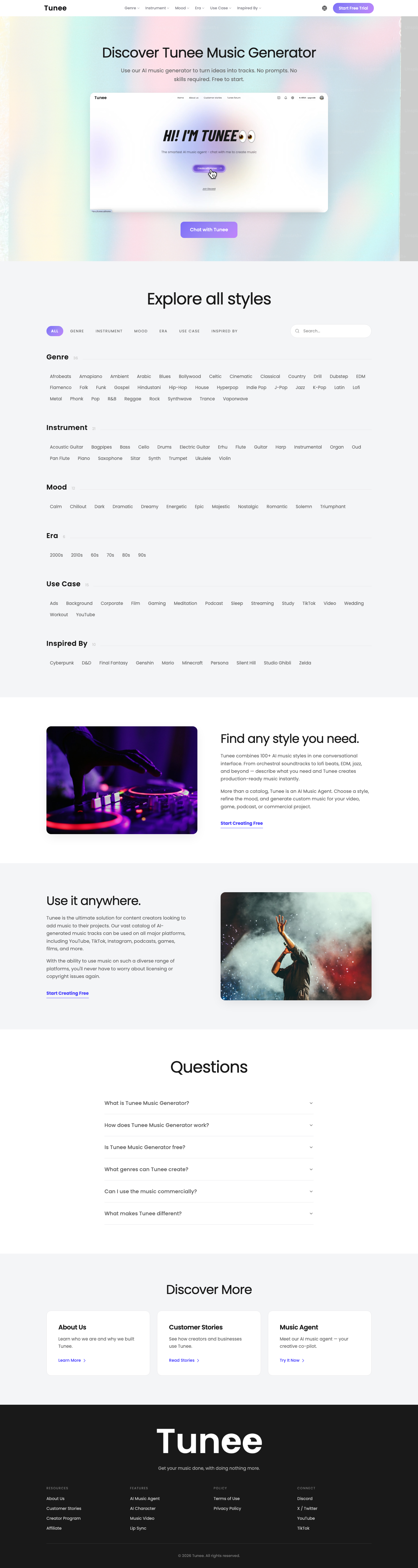
The Tunee AI music generator starts with a conversational brief: explain mood, genre, instruments, tempo, or a reference, then use the returned directions to shape a track. This Tunee AI music generator guide covers the creative path without claiming an independent audio benchmark.
How it works
Describe a feeling, genre, instrument, scene, or use case. The official page also lists image and video inspiration alongside text.
Use variations to decide what is close enough to refine. Keep notes on what changed so you are not choosing by thumbnail alone.
Before you generate repeatedly, confirm the current model, credit cost, download rules, and commercial rights for the account you are using.
Use-case fit
Start with a duration, visual mood, and platform context. Move to the music-video page when the track needs a visual treatment.
Describe scene tension, pacing, or instrumentation to generate a directional soundtrack. Budget time for editing and continuity checks.
Use conversational input to get beyond a blank page. Treat generated lyrics, vocals, and arrangements as drafts until reviewed.
Expected output
A useful Tunee AI music generator test ends with a reviewable draft, not a promise of a finished release. Save the brief, the selected direction, the credit cost shown, and the export settings so you can compare iterations.
Continue when the Tunee AI music generator gets close to the intended scene without expensive rework. Stop when repeated prompts still miss the brief or rights remain unclear.
Tunee AI music generator FAQ
No. Use the Tunee AI music generator for directions and drafts, then review arrangement, lyrics, vocals, mix, and intended use yourself.
Write the job first, compare early directions, and check the current credit estimate before repeated generations or mastering.
Move only after a track solves the brief. Then verify video duration, format, and rights on the separate music-video workflow.
Next step
Use one realistic use case, then check whether the output, credit use, and current rights terms match your workflow.
Brief examples
Queries such as Tunee AI music generator free, Tune AI music generator, 8 bit music generator online, guitar music creator, and phonk music generator AI can suggest a test direction. They do not prove that every style, model, or plan will produce a usable result.